Remembering Ozzy Osbourne’s Legacy
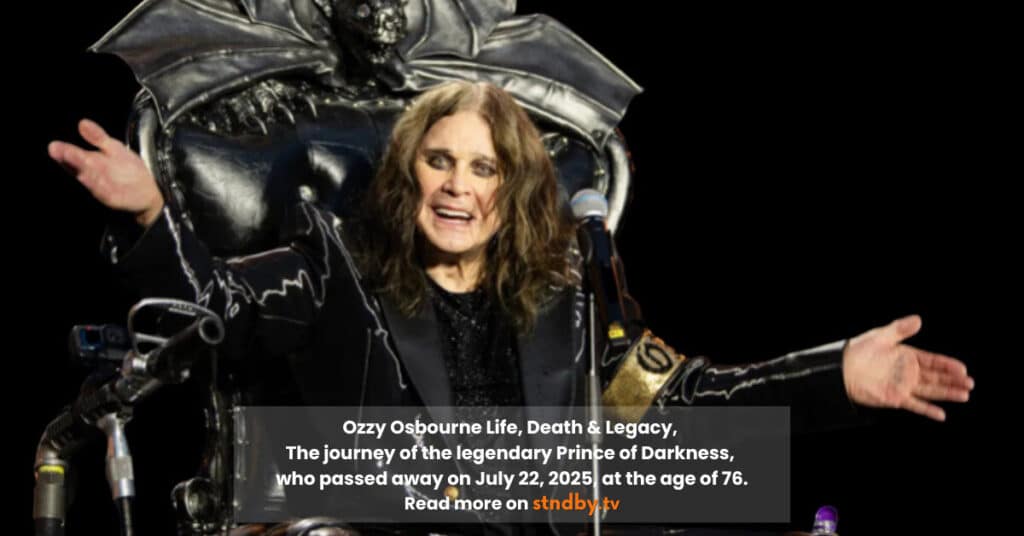
Ozzy Osbourne Life, Death & Legacy, the journey of the legendary Prince of Darkness, who passed away on July 22, 2025, at the age of 76. His death marked the end of an era in heavy metal and rock music, but his influence remains timeless. From his early beginnings in Birmingham to becoming the frontman of Black Sabbath and a prolific solo artist, Ozzy’s life was filled with groundbreaking music, personal struggles, and reinvention.
Following his passing, the Osbourne family issued a heartfelt statement:
“It is with more sadness than mere words can convey that we have to report that our beloved Ozzy Osbourne has passed away this morning. He was with his family and surrounded by love. We ask everyone to respect our family privacy at this time.” — Sharon, Jack, Kelly, Aimee, and Louis Osbourne.
This article explores Ozzy Osbourne Life, Death & Legacy, reflecting on his early years, his revolutionary impact on music, his battles with addiction and health, and the legacy he leaves behind.
Early Life and Foundations of Ozzy Osbourne’s Legacy
John Michael Osbourne was born on December 3, 1948, in Aston, Birmingham, England. Raised in a working-class family, Ozzy’s early life was marked by financial hardship and challenges including dyslexia, which affected his schooling. Despite these difficulties, he found escape and inspiration in music from a young age. The raw energy of artists like the Beatles and Elvis Presley fueled his passion, encouraging him to pursue singing.
Birmingham’s industrial environment also left a lasting impression on Ozzy. The city’s gritty, harsh atmosphere shaped his worldview and the dark tone that would become synonymous with his music. In 1968, he joined forces with guitarist Tony Iommi, bassist Geezer Butler, and drummer Bill Ward to form a band originally named Earth, soon renamed Black Sabbath. Their heavier, ominous sound was a stark contrast to the psychedelic and blues rock of the time, forging a new path that would birth the heavy metal genre. This formation marks a critical foundation of Ozzy Osbourne, his Life, Death & Legacy.
Ozzy Osbourne’s Role in Black Sabbath’s Metal Revolution
Black Sabbath’s self-titled debut album released in 1970 quickly became a milestone in music history. Ozzy Osbourne’s haunting vocals perfectly matched Tony Iommi’s heavy riffs, crafting a sound that was both eerie and groundbreaking. The album’s dark themes, including social anxiety, war, and occult imagery, were expressed in tracks like “Black Sabbath,” “N.I.B.,” and “The Wizard,” setting the foundation for heavy metal.
Their follow-up album, Paranoid (1970), featured genre-defining songs such as “Paranoid,” “Iron Man,” and “War Pigs.” These anthems spoke to a generation facing political turmoil and social unrest, solidifying Black Sabbath’s status as pioneers of heavy metal and influencing countless artists for decades.
Despite their success, internal tensions grew, largely due to Ozzy’s escalating substance abuse issues. His unpredictable behavior on and off stage made touring and recording increasingly difficult. A notorious example was the bat-biting incident in 1982, where Ozzy bit the head off a live bat during a concert, believing it was a rubber toy. This act became infamous and exemplified his wild persona, though it also added strain to the band’s dynamic.
Ultimately, Ozzy was dismissed from Black Sabbath in 1979 after the release of Never Say Die!, due to concerns over his reliability and growing creative differences. The split was painful but allowed both Ozzy and the band to pursue separate paths.
Even after leaving, Ozzy Osbourne’s legacy remained deeply tied to Black Sabbath. His voice and style helped define heavy metal’s sound and attitude. His subsequent solo career only strengthened his iconic status, cementing his place as one of rock’s most influential figures.
Ozzy Osbourne’s Solo Career and Continued Influence
After parting ways with Black Sabbath in 1979, Ozzy Osbourne launched a solo career that would prove just as influential as his time with the band. His debut solo album, Blizzard of Ozz (1980), introduced classics like “Crazy Train” and “Mr. Crowley,” songs that showcased Ozzy’s ability to innovate while expanding his signature sound. The album featured the virtuoso guitar work of Randy Rhoads, whose style was integral to its success.
Over the following decades, Ozzy released influential albums including Diary of a Madman (1981) and No More Tears (1991), both critically acclaimed and commercially successful. These records further cemented his place in rock history. Notably, No More Tears featured hits such as the title track and “Mama, I’m Coming Home,” highlighting Ozzy’s versatility and longevity.
A crucial figure in Ozzy’s solo resurgence was his wife, Sharon Osbourne. Following his departure from Black Sabbath, Sharon, who became his manager and lifelong partner, played a pivotal role in encouraging Ozzy to return to the studio and tour. Her guidance helped stabilize his personal life and career, ensuring he remained focused and productive despite his past struggles with addiction.
Beyond music, Ozzy’s 2002 MTV reality show, The Osbournes, introduced him to a new generation. The show offered an unfiltered glimpse into his family life, showcasing his humor and personality offstage, which broadened his appeal beyond the traditional rock fanbase.
Sharon’s management and unwavering support, paired with Ozzy’s relentless work ethic and talent, kept him relevant and influential for over four decades.
Back to The Beginning
In a significant moment near the end of his life, Ozzy Osbourne reunited with Black Sabbath for the “Back to the Beginning” charity concert held at Villa Park in Birmingham on July 5, 2025. This marked the band’s first live performance together since 2005 and was a celebration of their shared legacy.
The concert featured a star-studded lineup including Metallica, Guns N’ Roses, Slayer, Pantera, and Alice in Chains, with Ozzy performing while seated on a winged throne due to his Parkinson’s disease. Proceeds from the event benefited Cure Parkinson’s, Birmingham Children’s Hospital, and Acorns Children’s Hospice.
The concert was streamed globally and is planned for release as a film titled Back to the Beginning: Ozzy’s Final Bow in early 2026.
The concert raised £140 million (approximately $190 million USD) for charity, benefiting Cure Parkinson’s, Birmingham Children’s Hospital, and Acorns Children’s Hospice.
Personal Struggles and the Human Side of Ozzy Osbourne
Ozzy Osbourne’s life was far from easy, marked by well-documented struggles with substance abuse. His battles with heavy drinking and drug addiction often made headlines, impacting both his career and personal life. Yet, Ozzy was candid about these challenges, helping to destigmatize addiction and mental health issues. His openness inspired countless fans facing similar battles, showing that recovery is possible even after decades of hardship.
One of the most harrowing moments in Ozzy’s later years was a serious quad bike accident in 2003. He fell off the vehicle, resulting in a fractured skull and severe injuries that required emergency brain surgery. This accident left him in a coma for several days and was a turning point in his life, prompting him to make efforts to improve his health. The injuries contributed to lasting physical effects and influenced his later decisions about touring and recording.
Central to Ozzy’s recovery and stability was the unwavering support of his wife, Sharon Osbourne. The couple married in 1982, and Sharon became not only his spouse but also his manager and closest confidante. Throughout years of ups and downs, including public battles with addiction and health scares, Sharon remained a constant presence. Their enduring partnership reflects the deep loyalty and love at the heart of Ozzy Osbourne Life.
Health Challenges in Later Years
In 2020, Ozzy Osbourne was diagnosed with Parkinson’s disease, a progressive neurological disorder that affected his movement and speech. This diagnosis forced him to cancel multiple tours and limited his public appearances in his final years. Despite these challenges, Ozzy’s passion for music never diminished. He continued recording music, working on projects, and engaging with fans whenever his health permitted.
His struggle with Parkinson’s disease added a poignant and humanizing chapter to Ozzy Osbourne Life. Even while facing physical limitations, his resilience and dedication to his craft remained clear. This determination, paired with his lifelong battle against addiction and injury, shaped a legacy defined by endurance as much as musical innovation.
Final words on Ozzy Osbourne Life, Death & Legacy
Ozzy Osbourne’s life is a story of transformation, resilience, and groundbreaking artistry. From his working-class beginnings in Birmingham to becoming the Godfather of Heavy Metal, Ozzy’s influence reshaped the music world. His signature voice and dark, theatrical style helped define Black Sabbath’s pioneering sound and inspired generations of musicians across genres.
Beyond his musical achievements, Ozzy’s life embodied the struggle against addiction, injury, and illness. His quad bike accident in 2003, battles with substance abuse, and Parkinson’s diagnosis all underscore a journey marked by pain yet characterized by unwavering passion and perseverance.
Ultimately, Ozzy Osbourne’s Life is not just about a rock star’s career — it’s the story of a man who overcame personal demons and physical hardships to leave an indelible mark on music and culture. His legacy will continue to resonate with fans worldwide, inspiring future generations with his fearless spirit and unfiltered authenticity.
Frequently Asked Questions
Who was Ozzy Osbourne?
Ozzy Osbourne was a British singer, best known as the lead vocalist of Black Sabbath and for his successful solo career in heavy metal music.
When did Ozzy Osbourne die?
Ozzy Osbourne died on July 22, 2025, at the age of 76.
How did Ozzy Osbourne influence heavy metal music?
Ozzy helped pioneer heavy metal with Black Sabbath, influencing countless artists with his distinctive voice and dark themes.
What were some of Ozzy Osbourne’s most famous songs?
Some of Ozzy’s most iconic songs include “Crazy Train,” “Paranoid” with Black Sabbath, “Mr. Crowley,” and “No More Tears.”
What role did Sharon Osbourne play in his life?
Sharon Osbourne was Ozzy’s wife and manager, playing a critical role in his career and recovery.
Did Ozzy Osbourne really bite a bat’s head off?
Yes, during a 1982 concert in Des Moines, Iowa, Ozzy bit the head off a live bat thrown onstage, believing it was a rubber toy. The incident became infamous and part of his wild stage persona