Unleashing Japan’s Sonic Extremes
When you talk about sonic frontiers, there’s no way around the raw, untamed force known as Japanese noise music. Often dubbed ‘Japanoise’, this distinctively intense and experimental style of noise music exploded onto the global stage from Japan, primarily emerging in the late 1970s and early 1980s. It’s a sound that doesn’t just push boundaries; it obliterates them with a visceral, rhythmic assault you won’t soon forget. If you’re ready to experience music that challenges every conventional notion, Japanoise is your next deep dive. Explore Merzbow’s groundbreaking work on Spotify.
The Birth of Japanoise: A Rhythmic Rebellion
Japanoise isn’t just a genre; it’s a movement. Characterized by extreme volume and relentless intensity, it’s notoriously loud, abrasive, and often overwhelming. This chaotic and distorted sound heavily utilizes distortion, feedback, static, and other ‘unwanted’ sounds as primary musical elements, rejecting conventional melody, rhythm, and harmony in favor of pure sonic impact.
The pioneers of this scene didn’t just play music; they weaponized sound, forging a new path in experimental music.
Meet the Masters: Artists Redefining Sound
The Japanese noise music scene boasts a pantheon of legendary artists whose names resonate with a raw power. Foremost among them is Merzbow (Masami Akita), arguably the most iconic figure. His prolific output and relentless experimentation have cemented his status as a noise titan. Then there’s Masonna (Takashi Maki), known for his confrontational, high-energy live performances and often short, sharp bursts of sonic chaos.
Not to be overlooked is Hijokaidan, a collective that has been active since 1979, constantly evolving their sound and pushing the limits of extreme sound art and performance.
These artists aren’t just musicians; they’re sonic architects of disorder, crafting experiences that are as intellectually stimulating as they are physically demanding.
Experimental Techniques: Crafting the Chaos
What makes Japanoise so unique? It’s the relentless pursuit of experimental techniques. Artists frequently employ self-made or broken electronic equipment, effect pedals, tape loops, contact microphones, synthesizers, and non-musical sound sources to generate their signature sounds.
This DIY ethos is central to the Japanoise identity, allowing for limitless sonic exploration beyond the confines of traditional instruments. The focus is less on conventional musicality and more on texture, density, and the sheer physical presence of sound.
Venues and Vanguards: Where the Noise Lives
While the sound of Japanoise is global, its heart beats strongly in specific Japanese locations. Places like Ftarri Gallery and Gallery Cellar in Tokyo have been crucial hubs for the scene. These aren’t your typical concert halls; they’re intimate spaces, often doubling as record stores or art galleries, providing a dedicated platform for experimental artists. They foster a sense of community and offer listeners a direct, often challenging, experience with the music.
These venues are more than just stages; they are laboratories where the boundaries of sound are continuously tested and expanded. For example, Ftarri Gallery’s website showcases its commitment to experimental sound art and performances.
Performance Art and Theatrics: Beyond Just Music
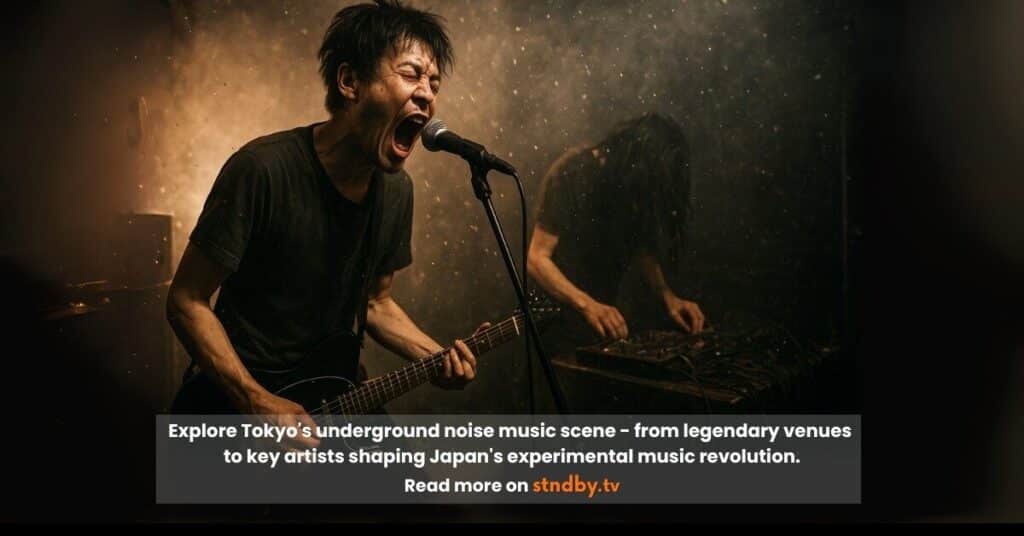
The live shows of many Japanese noise music artists are known for their confrontational, chaotic, and sometimes dangerous or highly theatrical elements. It’s not uncommon for performances to incorporate elements of performance art, pushing audiences to react and engage with the music on a deeper, more visceral level.
From ear-splitting feedback to intense physical acts, these shows are an experience, a statement, and a profound challenge to what live music can be. This theatricality underscores the raw, direct, and vivid tone that defines the Japanoise movement.
Final words on Japanoise: Sonic Chaos Unchained
The Japanese noise music scene, or Japanoise, remains a potent force in experimental music. It’s a genre that demands attention, challenges expectations, and rewards listeners willing to dive into its abrasive depths.
From the pioneering sounds of Merzbow, Masonna, and Hijokaidan to the intimate, dedicated spaces like Ftarri Gallery, Japanoise continues to evolve, proving that true artistic innovation often thrives on the edges of comfort and convention. It’s a sonic assault, yes, but one steeped in profound artistic vision.
Frequently Asked Questions
What is Japanese noise music?
Japanese noise music, or Japanoise, is an experimental genre known for extreme volume, distortion, feedback, and rejection of traditional musical elements, prioritizing raw sonic texture.
Who are some famous Japanoise artists?
Key artists include Merzbow, Masonna, and Hijokaidan, all renowned for their influential and experimental contributions to the genre.
What are the main characteristics of Japanoise?
It is characterized by extreme volume, chaotic and distorted soundscapes, the use of experimental and often self-made equipment, and highly theatrical or confrontational live performances.
Where did Japanoise originate?
The scene began to emerge in Japan in the late 1970s and early 1980s, growing from underground experimental music movements.