Why Concert IEMs Are Crucial for Live Performances
Concert IEMs are essential for musicians and crew they aren’t an option. They’re the backbone of any serious live setup. Floor wedges throw noise across the stage, bleed into mics, and make timing a gamble. Personal monitors deliver a clean, isolated mix directly to the performer, keeping every hit, vocal, and synth line audible. Isolation reduces ear fatigue and keeps sets tight, even when the crowd is roaring.
Stage crews rely on separate channels. Talkback lines keep production, FOH, and stagehands in sync without shouting. Cues land silently, hazards are flagged instantly, and shows stay on time. Frequency management is key: every band and crew channel must be assigned unique radio frequencies to prevent cross-talk or dropouts. High-end systems cost more upfront—custom setups can run several thousand dollars—but for touring acts, this investment pays off in reliability and performance precision.
How Concert IEMs Work on Stage
A professional monitoring setup has three main components: transmitter, bodypack receiver, and earphones.
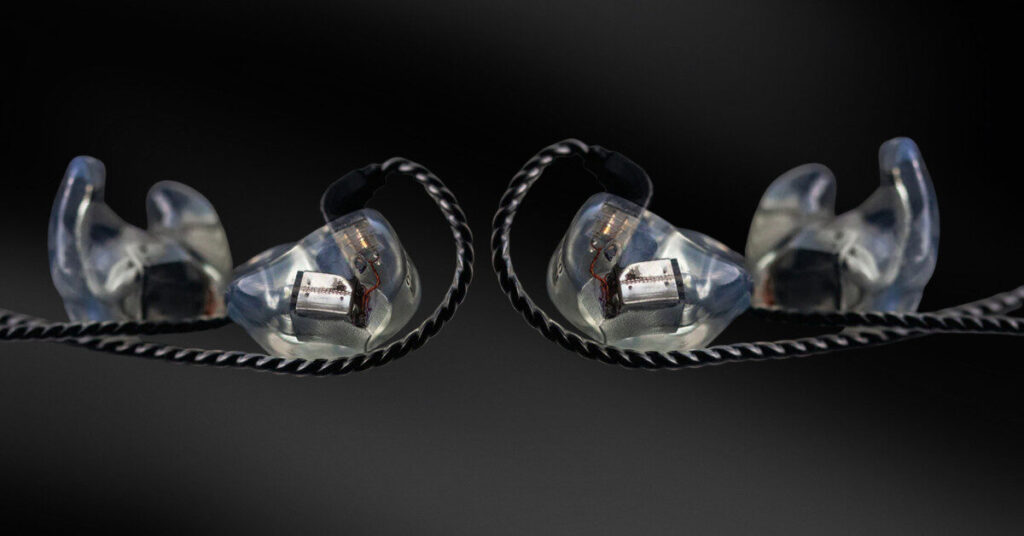
The transmitter shoots audio from FOH to performers wirelessly. Multi-channel, interference-proof, and stable even across multiple bands, it requires careful frequency planning to avoid collisions with other devices. The bodypack lets performers adjust volume, switch mixes, and stay in control on the fly. Custom or multi-driver earphones separate lows, mids, and highs, providing a precise, clear mix.
Performers get a personalized feed—vocals front, click track in sync, instruments balanced. Crew channels carry intercom communication, stage directions, and timing cues. High-quality systems can cost 2,000–5,000 gbp per setup depending on drivers and transmitters. Proper radio frequency coordination ensures a clean, uninterrupted feed across the stage and venue.
Universal vs Custom Concert Monitors
Universal-fit monitors are plug-and-play, perfect for rotating lineups or short tours. They use interchangeable tips and are easy to share. Comfort and isolation are limited compared to custom models.
Custom monitors, molded to the individual ear, provide maximum isolation, comfort, and consistent audio fidelity. Touring acts rely on Cosmic Ears and ACS Customs for multi-driver setups that block up to 30 dB of ambient noise, reduce listening fatigue, and deliver surgical frequency separation. Custom molds are an investment—often starting from 600 gbp per set—but they save performers’ ears and deliver mixes that universal tips can’t match.
Floor Monitors vs Personal Monitoring Systems
Floor monitors, or wedges, are traditional loudspeakers facing the performers. They allow musicians to hear themselves and their bandmates without relying solely on FOH mixes. Proper placement and angling are critical to avoid feedback and coverage gaps.
Advantages: simplicity, low cost, and familiarity. Drawbacks: high stage volume, risk of feedback, limited mobility. Many acts combine wedges with personal monitors for clarity and flexibility across venues. Coordinating radio frequencies for wireless wedges can prevent interference with IEM channels. Floor monitors alone cost less, usually a few hundred per wedge, but they don’t offer the precision or isolation of a personal monitoring system.
Hybrid Monitoring Systems on Stage
Hybrid setups combine in-ear monitors with wedges to provide redundancy and flexibility. Personal monitors give precise, isolated mixes while floor wedges offer full-bodied stage reference. Crew communications run on separate channels, keeping performers’ mixes clean.
Festival stages and large venues benefit most: if wireless monitors drop out, wedges keep performers on track.
Frequency coordination is critical in these environments to avoid cross-talk across multiple bands and IEM channels.
Hybrid systems are costlier, often 5,000–8,000 gbp for full stage coverage, but they guarantee uninterrupted audio and allow performers to adapt to different acoustics and stage layouts, maintaining clarity no matter the environment.
Stage Crew Communication Using Concert Monitors
Crew depend on personal monitoring systems to manage stage operations efficiently.
Talkback channels allow silent coordination of lighting, video, effects, and safety alerts. Stagehands, FOH, and managers stay in sync without interfering with performers’ audio. Radio frequency planning ensures multiple crew channels can operate simultaneously without interference, which is crucial for complex tours or festivals.
High-end monitoring packs for crew can cost 500–1,500 gbp per unit, but this ensures flawless communication under pressure.
Advanced systems include multiple talkback channels, adjustable volume per crew member, and wireless network integration, guaranteeing tight coordination during multi-band, high-pressure shows.
Professional Features and Setup Tips for Monitors
High-end personal monitors include:
- Multi-driver earphones for low, mid, and high separation
- Low-latency wireless transmission to prevent timing issues
- Detachable or replaceable cables for reliability
- High isolation (25–30 dB) to protect hearing
- Customizable EQ per performer mix
Models from Cosmic Ears and ACS Customs are touring mainstays, offering durability, fidelity, and adaptability. Setup requires gain staging, limiters to protect hearing, frequency coordination to avoid interference, and regular cleaning. Backup kits with spare cables, tips, and receivers are essential for festival runs. Proper maintenance ensures reliability across tours. Professional setups including transmitters and spare receivers often cost several thousand dollars but guarantee consistency night after night.
Troubleshooting Common Stage Monitor Issues
- Signal dropouts: adjust frequencies or reposition antennas
- Distortion: check transmitter and receiver gain levels
- Poor isolation: reseat or replace ear tips or custom molds
- Moisture damage: store gear in hard cases with silica packs
Final words on Concert IEMs: Essential for Musicians & Crew
Concert in-ear monitors are no longer optional—they’re the lifeline of modern live shows. From precise personal mixes for performers to silent, coordinated channels for crew, they keep sets tight, timing perfect, and ears protected. Whether using universal-fit or custom molds, combining them with floor monitors, or managing complex radio frequencies on festival stages, investing in a professional setup pays off in reliability and performance.
For touring acts and serious gigs, skipping personal monitoring isn’t an option—clarity, control, and stage safety demand it.
Frequently Asked Questions
What are concert in-ear monitors used for?
They provide personalized mixes to performers, isolating them from stage noise.
How do crew use personal monitors for communication?
Dedicated channels let stagehands and FOH coordinate without interfering with performers.
Are custom-fit monitors better than universal ones?
Yes, they offer superior isolation, comfort, and multi-driver fidelity.
Do floor monitors replace in-ear systems?
No. Floor wedges provide reference, but personal monitors give precise, isolated mixes.
How can I prevent signal issues during shows?
Use proper radio frequency coordination, gain staging, and backup receivers or cables.